We All Matter News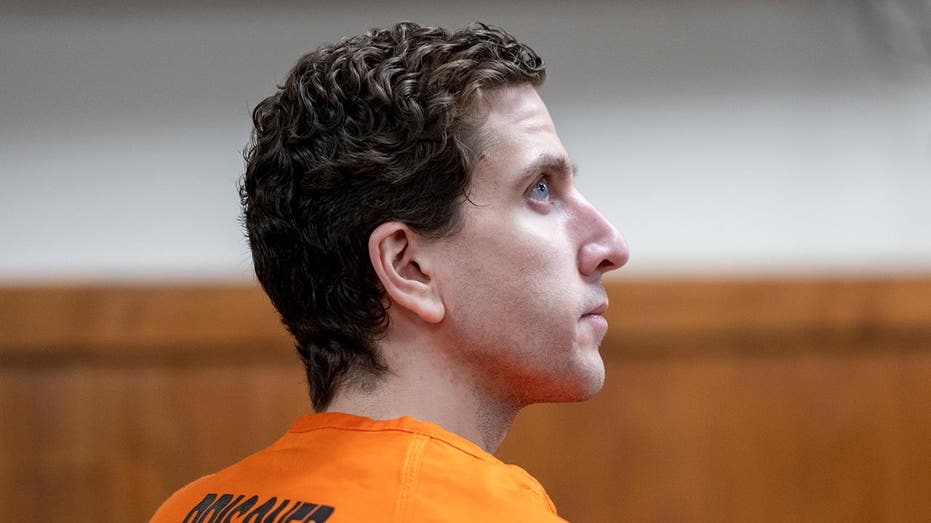
Newly Released Emails Detail How Campus Police Identified Bryan Kohberger’s Car Early in Idaho Student Murder Investigation
Public records obtained from Washington State University shed new light on how campus police identified the car linked to Bryan Kohberger weeks before he was formally named a suspect in the murders of four University of Idaho students.
The internal emails, made public through a records request, outline how officers at Washington State University (WSU) located a white 2015 Hyundai Elantra connected to the investigation just 16 hours after receiving information about the vehicle on November 28, 2022. Kohberger was not arrested until more than a month later, on December 30.
In a January 5, 2023 message to department staff, then-WSU Police Chief Gary Jenkins clarified that the timeline described in the arrest warrant affidavit did not fully reflect when local agencies were first asked to watch for the vehicle.
According to Jenkins, the affidavit stated that law enforcement agencies were alerted on November 25, 2022. In reality, he wrote, that request did not go out until the morning of November 28.
Despite the discrepancy, Jenkins emphasized that WSU officers moved swiftly. He praised Officer Daniel Tiengo and Sergeant Curtis James Whitman for identifying the Elantra in Pullman, Washington, shortly after the alert was issued. Kohberger, then a criminal justice graduate student at WSU, owned a vehicle matching that description.
The chief’s email was sent just after the probable cause affidavit became public on December 29, 2022. Jenkins highlighted the work of his department, urging staff to see the moment as an opportunity to reshape public perception of campus policing.
He described the officers’ actions as critical to locating what ultimately proved to be the suspect vehicle, arguing that their investigative work put the university police department in a positive national spotlight.
The tragedy at the center of the case shook communities across Idaho and Washington. On November 13, 2022, University of Idaho students Ethan Chapin, Madison Mogen, Xana Kernodle, and Kaylee Goncalves were found killed in their off-campus home in Moscow, Idaho.
A separate email, dated November 27, 2022, from Moscow Police Department Lead Detective Corporal Brett Payne, also became public as part of the records release. In that message, Payne instructed surrounding agencies not to stop or detain the driver of the white Hyundai Elantra unless there was an immediate life-or-death emergency.
Officers were ordered not to initiate contact with the driver under ordinary circumstances, signaling the high-stakes and tightly controlled nature of the developing investigation.
The release of these communications offers a window into the complicated coordination among regional law enforcement agencies during a high-profile and emotionally charged investigation. It also raises broader questions about transparency, accuracy in legal filings, and how critical timelines are communicated to the public.
In July 2025, Kohberger pleaded guilty to the murders as part of a deal that removed the possibility of the death penalty. In exchange, he was sentenced to four consecutive life terms without the possibility of parole, along with an additional sentence for felony burglary.
For many, the case underscores the importance of accountability within the justice system — not only in prosecuting violent crime, but in ensuring that law enforcement agencies are transparent about their actions. Public records laws exist precisely so communities can evaluate how power is exercised in their name.
As the families of the four students continue to mourn an unimaginable loss, the newly released emails serve as a reminder that justice is not only about verdicts and sentences. It is also about democratic oversight, honest timelines, and making sure institutions entrusted with public safety operate with integrity and clarity.