We All Matter News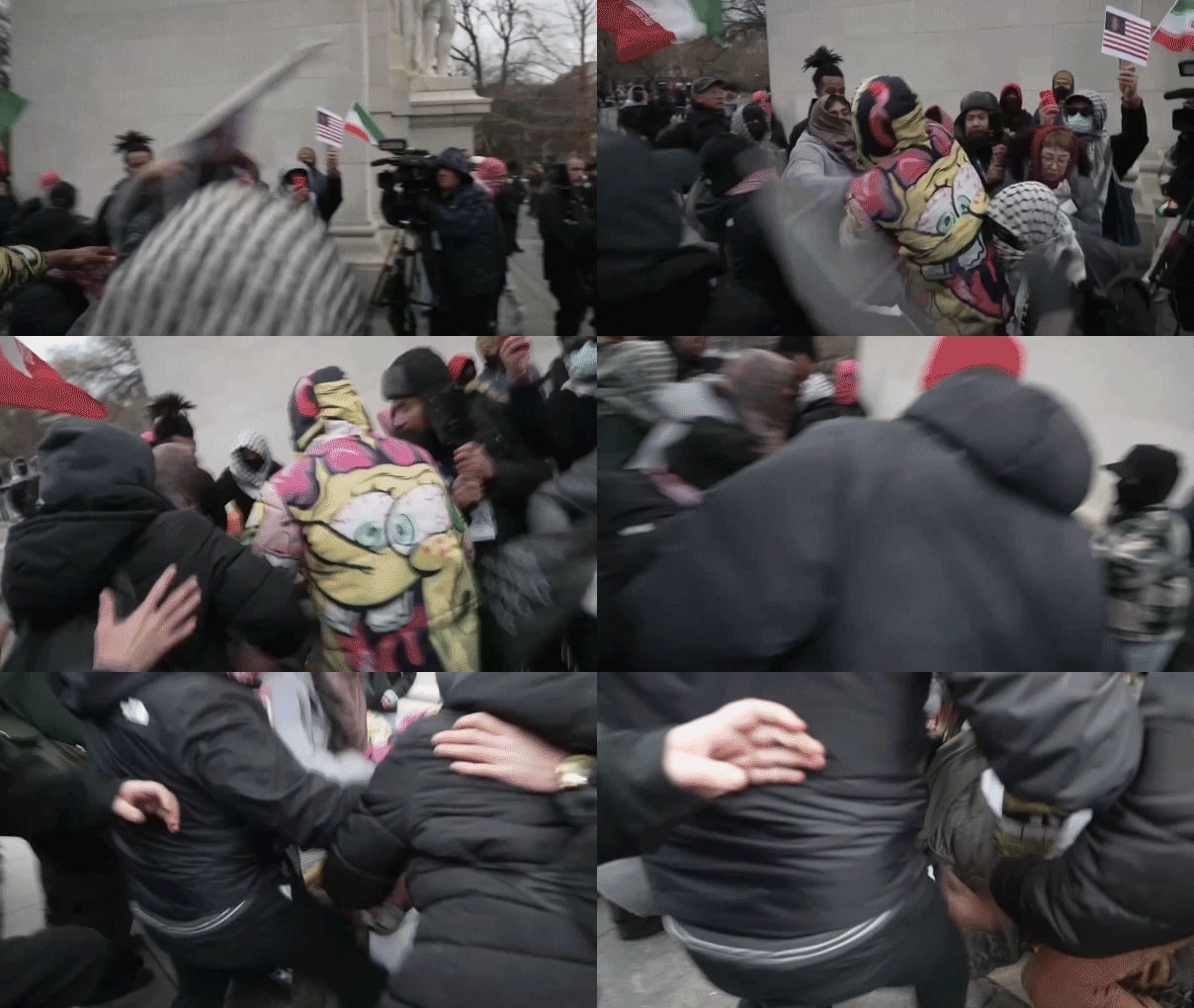
Tensions Explode at Washington Square Park Vigil Amid Deep Divisions Over Iran and U.S. Foreign Policy
What began as a vigil in Manhattan’s Washington Square Park quickly spiraled into physical confrontation Friday night, underscoring the deep fractures — both within New York City and across the global Iranian diaspora — over the legacy of Iranian Supreme Leader Ayatollah Ali Khamenei and escalating Middle East violence.
Attendees had gathered to mourn Khamenei, who was killed last week in an Israeli airstrike targeting leadership in Tehran. Organizers described his death as a politically motivated killing and used the vigil to denounce U.S. and Israeli actions in the region. A small memorial space featured candles, photos, and Palestinian keffiyeh scarves, signaling solidarity with Palestinian liberation efforts and broader resistance to Western intervention.
But tensions boiled over when a man attempted to rip down a poster of Khamenei from the memorial display. Video footage shows another individual striking him in the face, knocking him to the ground. The altercation sparked a wider scuffle as people shouted and physical confrontations spread through the crowd.
The New York Police Department intervened as chaos unfolded, detaining multiple individuals. Videos circulating online capture officers separating fighting groups while onlookers yelled expletives.
A Rally Marked by Clashing Narratives
The vigil highlighted starkly competing narratives about Khamenei’s leadership and the future of Iran. Flyers distributed by organizers framed his death as an “assassination by U.S. government forces,” though Saturday’s strike in downtown Tehran was carried out by the Israeli military. U.S. officials have publicly denied involvement.
Organizers praised Khamenei for what they described as his resistance to Western domination and his support for Palestinian self-determination. Their materials pointed to Iran’s break with Israel following the 1979 revolution and its backing of Palestinian resistance movements as evidence of a long-standing anti-imperialist stance.
Across the park, however, counter-protesters waved American, Israeli, and pre-1979 Iranian flags, chanting “U.S.A.” and denouncing the Iranian regime. Some Iranian Americans in attendance expressed relief at the strike, arguing that it targeted an authoritarian government rather than the Iranian people themselves.
“We’re here to show everyone that Iranians don’t like the regime,” one counter-protester said during a television interview at the scene.
“This war is not about the Iranian people,” another woman added. “It’s against the Islamic Republic.”
The Human Cost of Escalation
The confrontation in New York reflects a broader and painful truth: conflicts abroad reverberate deeply within immigrant communities at home. Many Iranian Americans have family members directly affected by political repression, economic sanctions, and now military escalation. Simultaneously, Palestinians and their allies view Israeli military action through the lens of decades-long occupation and displacement.
Progressives have long argued that aggressive militarism and backroom geopolitical maneuvering rarely serve ordinary people — whether in Tehran, Tel Aviv, Gaza, or New York. Instead, they often intensify instability, empower hardliners, and leave working families to bear the brunt of violence, sanctions, and uncertainty.
Friday’s unrest also underscores the urgent need for spaces where political dissent can be expressed without devolving into harm. While New Yorkers have a proud tradition of protest and free expression, physical violence only distracts from substantive debate about human rights, self-determination, and the path toward peace.
As Middle East tensions rise, the scenes in Washington Square Park serve as a reminder that U.S. foreign policy decisions — and the actions of allied governments — are never abstract. They ripple outward, shaping lives across continents and communities. For many Americans, especially those with roots in the region, the stakes are intensely personal.
Whether one views Khamenei as a symbol of resistance or repression, the escalating conflict demands a renewed commitment to diplomacy, accountability, and the protection of civilian life. Absent that, more scenes of grief, division, and violence — at home and abroad — are tragically likely to follow.