We All Matter News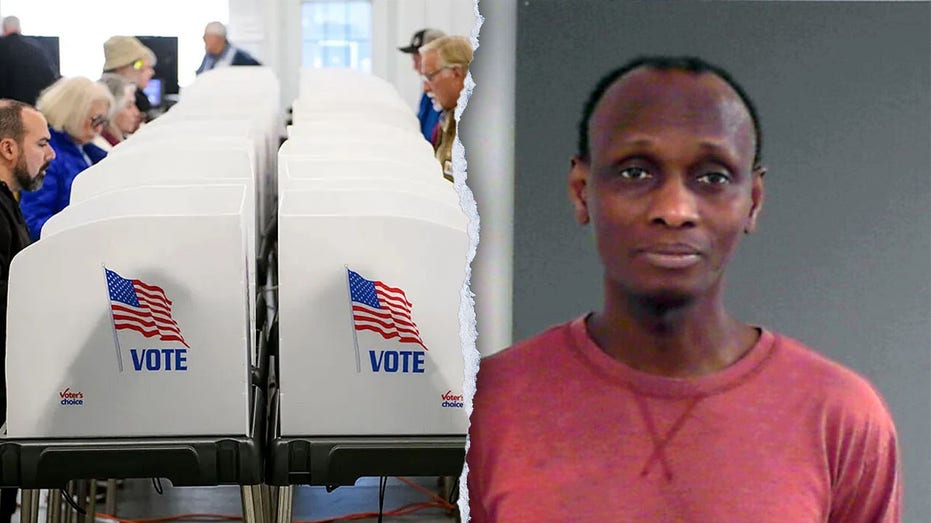
Immigrant Charged in Long-Running Voting Case as Lawmakers Clash Over Election Access
A Mauritanian man living in Philadelphia has been charged with voter fraud after federal officials alleged he cast ballots in multiple presidential elections despite not being a U.S. citizen. The case arrives at a politically charged moment, as members of Congress debate sweeping changes to federal voting laws that critics warn could make it harder for working-class and marginalized Americans to participate in democracy.
Mahady Sacko, 50, was charged this week following an investigation by the Department of Homeland Security. Prosecutors allege that he voted in every general presidential election from 2008 through 2024, as well as in primary elections in 2016 and 2020.
A Complicated Immigration History
According to court documents, Sacko entered the United States through Miami in March 1998. An immigration judge ordered him removed from the country in 2000. After appealing the ruling, the Board of Immigration Appeals upheld the removal order in 2002. Authorities say he did not leave the United States following that decision.
In 2007, Immigration and Customs Enforcement (ICE) arrested Sacko. However, officials were unable to deport him because he did not have a valid Mauritanian passport, and the agency could not obtain one. As a result, he was placed under supervision and required to check in regularly with immigration authorities — a requirement prosecutors say he followed.
Allegations of Illegal Voting
Investigators subpoenaed voting records from Philadelphia election officials and the Pennsylvania Department of State in May 2025. Those records allegedly show that Sacko registered to vote in 2005 and cast ballots in the 2008, 2012, 2016, 2020, and 2024 general elections. He is also accused of voting in the 2016 and 2020 primaries.
Authorities allege he falsely claimed U.S. citizenship on voter registration forms, which included his name, address, Social Security number, and date of birth. Most of the ballots were reportedly cast in person, with the exception of the 2020 primary, when he voted by mail.
If convicted, Sacko could face serious criminal penalties. Federal officials have emphasized that non-citizen voting in federal elections is illegal and rare, but remains a politically explosive issue.
Political Firestorm Over Voting Rights
The charges come as congressional Republicans intensify their push for the SAVE America Act, legislation that would require documentary proof of citizenship to register to vote in federal elections. Supporters argue the bill is necessary to protect election integrity.
Democracy depends on public trust — but it also depends on ensuring that every eligible citizen can access the ballot without unnecessary barriers.
Voting rights advocates and many Democrats warn that the proposed law could disenfranchise millions of eligible Americans, particularly low-income voters, seniors, rural residents, naturalized citizens, and communities of color who may face hurdles obtaining updated citizenship documents. While most Americans carry some form of photo identification, documentation proving citizenship — such as a passport or certified birth certificate — is not universally accessible and often comes with fees and bureaucratic delays.
Research consistently shows that instances of non-citizen voting are exceedingly uncommon. Still, high-profile cases like this one are frequently cited in broader political arguments over access to the ballot box.
Balancing Integrity and Inclusion
The Sacko case underscores the tension at the heart of America’s ongoing voting debate: how to safeguard elections while protecting the fundamental democratic principle that every eligible citizen deserves an equal voice. Civil rights organizations emphasize that reforms must be narrowly tailored and backed by data — not fear — in order to strengthen democracy rather than undermine it.
As lawmakers continue to spar, advocates stress that protecting the vote means both enforcing existing laws and resisting efforts that could unfairly burden everyday Americans trying to make their voices heard.
- Non-citizen voting in federal elections is illegal and subject to prosecution.
- Voting rights experts say confirmed cases remain rare relative to the size of the electorate.
- Debate over new proof-of-citizenship requirements is likely to intensify in the months ahead.
For millions of Americans, the broader question remains urgent: How can we protect democratic institutions while ensuring that access to the ballot remains open, fair, and truly for all?