We All Matter News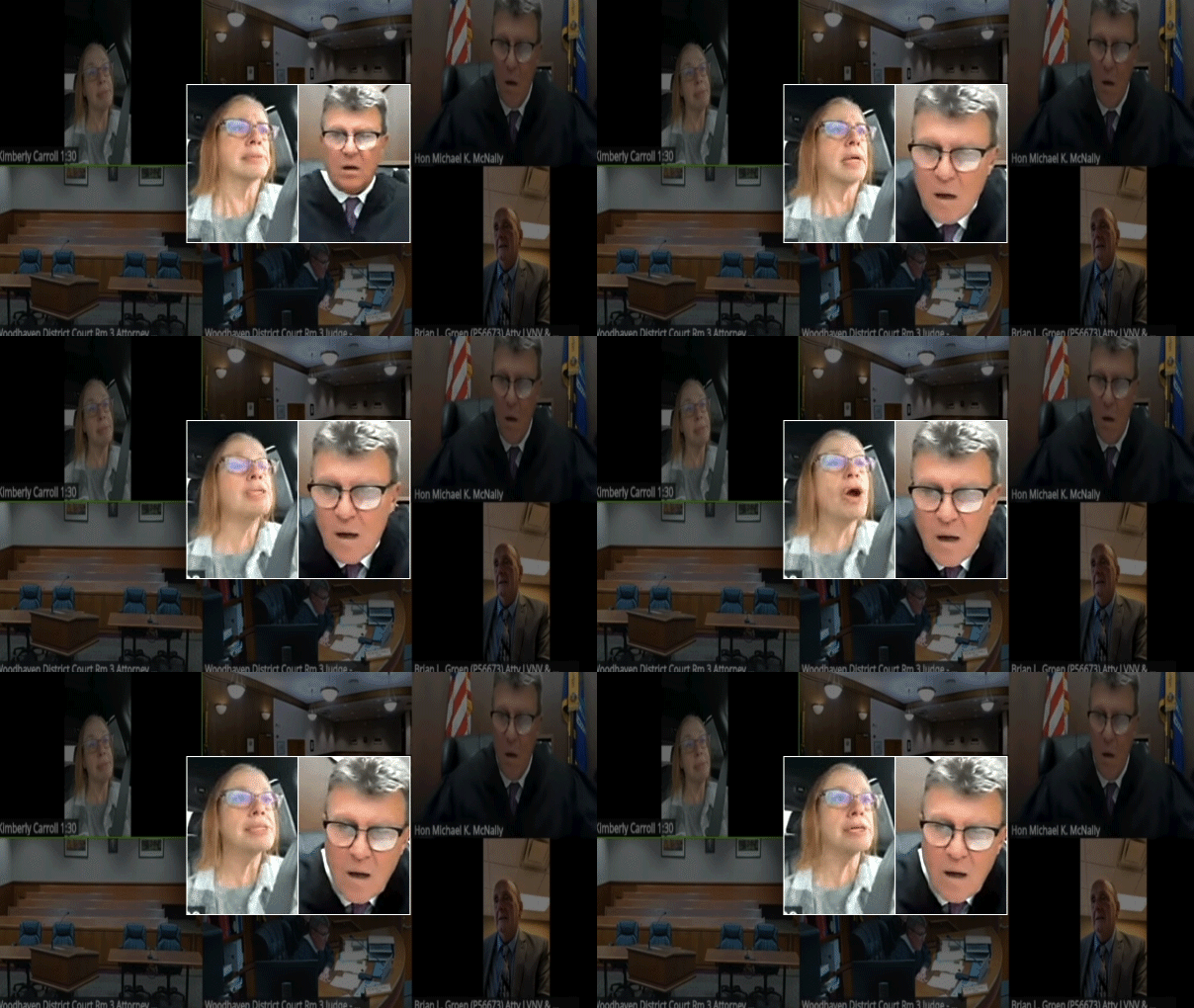
A $1,900 Judgment and a Zoom Call: Power, Debt, and a Michigan Courtroom Clash
A routine virtual court hearing in Michigan took a sharp turn this week when a judge berated a woman who appeared to be joining the proceedings from inside a car. The exchange, captured during a Zoom session in Woodhaven’s 33rd District Court, raises broader questions about access to justice in a country where working people often juggle emergencies, transportation challenges, and mounting debt—all while navigating an unforgiving legal system.
Kimberly Carroll had logged on to a remote hearing tied to a debt lawsuit filed by LVNV Funding LLC. The case centered on roughly $1,788 in alleged unpaid debt, with additional court costs bringing the total judgment to just over $1,900. Like millions of Americans facing collection actions, Carroll was attempting to appear in court virtually—an option that became commonplace during the pandemic and was intended to make participation in legal proceedings more accessible.
When the case was first called, Carroll was not present, prompting Judge Michael McNally to enter a default judgment against her. Soon after, a participant identified only as “iPhone” joined the session and was admitted. That participant was Carroll.
As she oriented herself on camera, Carroll apologized, explaining she was trying to understand the platform. But when her video feed became clear, she appeared seated in a vehicle, wearing a seatbelt.
Judge McNally immediately questioned whether she was driving.
“You cannot be driving, ma’am. What are you doing?” he asked.
Carroll responded that she was not behind the wheel but riding as a passenger. The judge said he does not conduct hearings with participants inside vehicles and instructed her to pull over.
Carroll stated she was dealing with a family emergency and traveling out of town. She said she would ask the driver to stop the car. But the judge expressed skepticism, pointing to the visible angle of the seatbelt and her position in the vehicle as evidence that she was driving.
The exchange grew more pointed when Judge McNally pressed her about which side of the car she was sitting on. Carroll initially said she was on the left-hand side before correcting herself, prompting the judge to question the credibility of her explanation. He also highlighted that the seatbelt appeared to be positioned as it would be for a driver.
“Now you’re lying to me, right?” McNally said.
Carroll denied that claim. When the judge asked to see the driver, she answered that she would need to ask their permission before turning the camera. Shortly afterward, she appeared to exit the vehicle.
The judge remained unconvinced.
“Do you think I’m that stupid?” he said before announcing he would proceed with the case.
McNally reinstated the default judgment, stating on the record that Carroll had not been present when the case was called and later appeared in a vehicle while denying she was driving. As the hearing concluded, Carroll attempted to assert that she had signed in on time. The judge dismissed her explanation and ended the session.
Access to Justice in a Digital Age
While courtroom decorum matters, the confrontation underscores a deeper reality: for many Americans living paycheck to paycheck, court appearances collide with work schedules, caregiving responsibilities, and unexpected emergencies. Virtual hearings were heralded as a reform to make courts more accessible. Yet when rigid expectations meet real-life instability, working people can still find themselves shut out—and saddled with judgments that intensify financial strain.
Default judgments in debt cases are common across the United States, often entered when defendants fail to appear or cannot navigate procedural hurdles. Consumer advocates have long warned that debt-collection lawsuits disproportionately affect low-income communities and communities of color, where even a modest judgment can spiral into wage garnishment or damaged credit.
In this case, what began as a dispute over less than $2,000 ended with a tense exchange reflecting the power imbalance inside American courtrooms. Judges hold significant authority over outcomes that can shape a person’s financial stability. For defendants already in precarious situations, a single missed moment—whether due to technology hiccups or life’s unpredictability—can carry long-term consequences.
As courts continue to rely on digital platforms, the legal system faces a pressing question: will it use technology to expand fairness and participation, or will procedural rigidity continue to fall hardest on those with the least room for error?
For many Americans entangled in debt litigation, the difference is not theoretical. It’s the difference between a manageable setback and a deeper slide into economic insecurity.