We All Matter News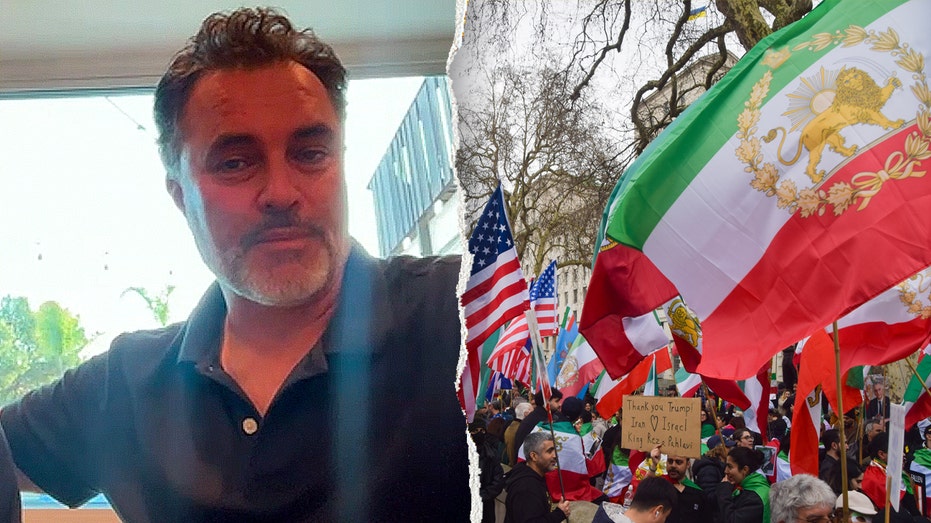
Iranian American Couple Shares Painful Past as U.S. Strikes on Iran Spark National Debate
As anti-war demonstrations unfold in cities across the United States, one Iranian American couple in Southern California says the public debate over military action hits deeply personal notes.
Behzad Hemmati, 50, and Rahil Nazarian, 42, both fled Iran as young adults and built new lives in the United States. Watching protests condemning the U.S. military campaign known as Operation Epic Fury, they say they are reminded of the repression they experienced growing up under Iran’s Islamic Republic.
While many Americans have taken to the streets urging de-escalation and diplomacy, Hemmati and Nazarian describe the current conflict not as a conventional war, but as what they call a “rescue mission” aimed at weakening a government they say has oppressed its own people for decades.
Childhoods Shaped by Revolution and Repression
Hemmati was born during the final years of Shah Mohammad Reza Pahlavi’s rule but came of age after the 1979 Islamic Revolution. He recalls a rigid society where young people’s daily lives were tightly controlled.
“As a teenager, you just want to live freely,” he said, describing restrictions on socializing, strict gender separation, and cultural limitations that he believes suffocated basic expression. According to Hemmati, these rules were more than customs — they were tools of control.
Nazarian’s childhood was shaped by the Iran-Iraq War and the political upheaval that followed. She says her father, a teacher, lost his job after the revolution because of his association with the pre-revolution government. She alleges that her family’s property was seized and that her father was repeatedly detained by authorities.
“They took everything,” Nazarian said, recounting how her father was summoned by the Revolutionary Guard with promises of restitution — and never returned.
She says several members of her extended family were executed during that period. For her, the current conflict reopens wounds that never fully healed.
A Fractured American Conversation
Operation Epic Fury, launched in the early morning hours of Feb. 28, has drawn both support and fierce criticism. Many Americans — including peace advocates, labor groups, and progressive organizers — have warned that military escalation risks civilian lives and long-term regional instability.
Hemmati, however, says he struggles to reconcile those protests with what he believes ordinary Iranians are enduring.
He and Nazarian say they are in regular contact with relatives in Iran. Despite the danger posed by airstrikes near their loved ones’ homes, they claim family members have expressed support for targeting the Islamic Revolutionary Guard Corps (IRGC), which they see as central to maintaining authoritarian power.
The couple says they attend pro-intervention rallies in Southern California nearly every weekend, framing their activism as an effort to amplify voices they believe cannot safely speak inside Iran due to internet restrictions and government crackdowns.
- They argue that weakening IRGC infrastructure could embolden domestic протест.
- They believe diaspora communities have a responsibility to speak out.
- They acknowledge the risk of civilian casualties but say some Iranians see sacrifice as the price of change.
Freedom, Risk, and Competing Visions of Peace
The couple’s perspective reflects a painful reality of diaspora politics: communities shaped by state violence sometimes view outside intervention through a different lens than Americans focused primarily on avoiding another prolonged war.
Nazarian says relatives have told her they are willing to endure hardship if it could lead to long-term freedom. She reports hearing messages of gratitude directed at President Donald Trump for authorizing the strikes, viewing them as pressure on a regime they consider illegitimate.
Still, the broader American debate continues. Progressive advocates emphasize that ordinary Iranian civilians, like working families everywhere, bear the brunt of military conflict. They call for international solidarity with Iran’s people — not policies that risk further destabilization.
For Hemmati and Nazarian, the conversation remains deeply personal. They say they have not returned to Iran in nearly two decades and nine years, respectively. Their children have never met many of their relatives.
If conditions stabilize, they say they hope to board the first flight back, reconnecting a family long divided by politics and exile.
“We’ve waited decades,” Hemmati said, acknowledging the tragic costs that war can bring while holding onto hope that lasting freedom — however it comes — might finally allow them to go home.
As Americans wrestle with how best to stand for democracy abroad without repeating the mistakes of the past, stories like theirs underscore the urgency of centering human rights, civilian safety, and accountability — wherever power is abused.