We All Matter News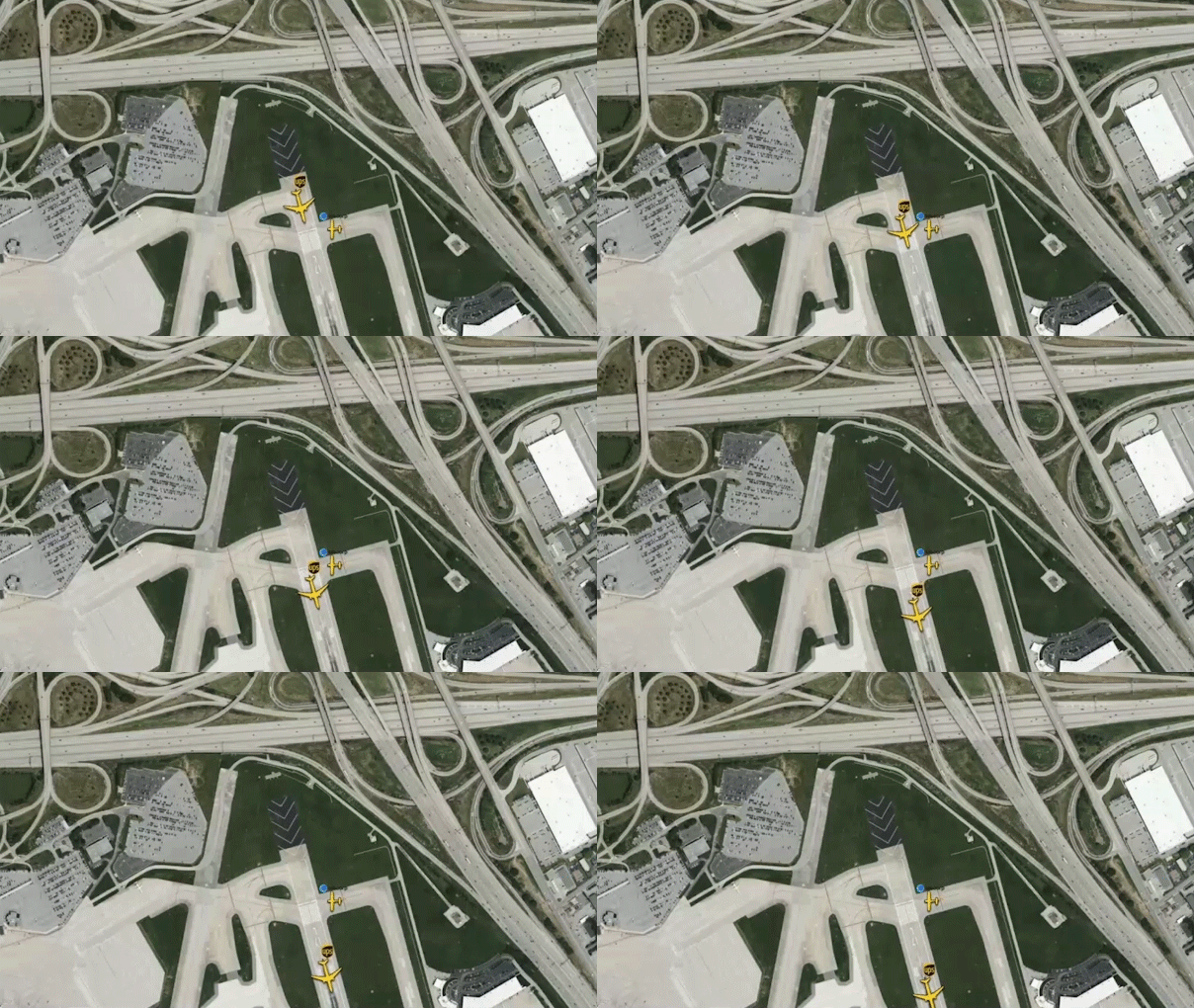
Another Close Call at Louisville Airport Raises Urgent Safety Questions
A UPS cargo plane was forced to abruptly abort its landing early Tuesday morning at Louisville Muhammad Ali International Airport after a smaller aircraft entered the runway without authorization—an alarming near miss at the very same airport where a devastating crash claimed 15 lives just months ago.
According to air traffic control audio obtained by local outlets, the tension in the control tower was unmistakable. As the dangerous situation unfolded, a controller shouted, “What are you doing?” while urgently instructing the smaller aircraft—identified as Skylab 25—to stop. Moments later, the incoming UPS jet was directed to pull up and circle for another attempt.
The aircraft, a Boeing 767 operating as UPS Flight 1303 from Atlanta, was descending toward the runway when the controller ordered the go-around. The Federal Aviation Administration later confirmed that the smaller plane had turned onto the runway without clearance. Officials said the required distance between the two aircraft was maintained, preventing catastrophe.
UPS stated that the maneuver was conducted safely and followed standard protocol. The flight reportedly descended to roughly 500 feet before climbing back to approximately 1,500 feet in a short span. No injuries or operational disruptions were reported.
A Pattern That Demands Scrutiny
While the immediate crisis was averted, the episode has understandably rattled aviation workers and Louisville residents. The airport is home to UPS Worldport, the company’s largest package-processing facility in the world—a sprawling 5.2 million-square-foot hub that serves as the backbone of UPS’ global air network. Thousands of workers pass through the facility every day, keeping supply chains running around the clock.
This latest scare comes in the shadow of tragedy. In November 2025, a UPS cargo jet crashed shortly after takeoff from the same airport. All three crew members aboard were killed, along with 12 people on the ground. Investigators with the National Transportation Safety Board determined that the plane’s left engine detached soon after liftoff, caught fire, and caused the aircraft to slam back to earth after reaching only about 30 feet in altitude.
Surveillance footage showed the engine separating from the wing before impact. Federal investigators identified structural cracks in the engine mount as a likely cause of the catastrophic failure. In response, UPS grounded its fleet of McDonnell Douglas MD-11 aircraft, and the FAA ordered inspections and repairs for the model nationwide.
Safety Is Not Optional
For aviation workers and nearby communities, these incidents underscore a broader truth: safety cannot be treated as a cost-saving measure or an afterthought. Pilots, air traffic controllers, maintenance crews, and ground workers depend on robust oversight, strong unions, and properly funded regulators to ensure that corners are never cut.
Air travel remains one of the safest modes of transportation in the United States, thanks in large part to strict procedures—like the go-around that prevented disaster this week. But experts have repeatedly warned that understaffing in air traffic control towers, aging aircraft fleets, and corporate pressure to maximize efficiency can create dangerous conditions if not addressed.
- Air traffic controllers nationwide have reported chronic staffing shortages.
- Older aircraft models require rigorous, transparent maintenance oversight.
- Workers must feel empowered to report safety concerns without fear of retaliation.
When the controller shouted “Stop!” and ordered the UPS flight to climb, the system worked as designed. That decisive action prevented what could have been another heartbreaking headline. But near misses are warnings, not victories.
Communities deserve accountability, and workers deserve ironclad protections that put human life before profit margins.
In a separate incident last week near Blue Grass Airport in Lexington, a small propeller plane landed in a field, though both people on board escaped injury. While unrelated, it is yet another reminder that aviation safety requires constant vigilance.
For the families still grieving the 15 lives lost in November, this week’s close call reopens wounds and raises pressing questions. Ensuring safe skies demands sustained investment in oversight, modern infrastructure, and the skilled workers who keep flights safe every day. Anything less risks turning preventable mistakes into irreversible tragedies.