We All Matter News
Federal Sweep Targets Alleged Transnational Gang Activity Across Six States
Federal prosecutors have charged more than 25 alleged members and associates of the transnational gang Tren de Aragua (TdA) in a sweeping, multi-state operation that led to the seizure of more than 80 firearms, approximately 18 kilograms of narcotics, and over $100,000 in cash. The crackdown, which spanned six federal districts, is part of a broader federal push that has now resulted in charges against more than 260 people accused of ties to the organization.
Authorities say the operation focused on alleged gun trafficking, drug distribution, and other violent crimes connected to TdA’s presence in the United States. Federal investigators reported recovering fentanyl, cocaine, methamphetamine, ecstasy, ketamine, MDMA, and “tusi,” a pink powder often containing ketamine or MDMA.
Multi-State Charges Filed
The charges were filed in federal courts in Colorado, Southern Florida, Northern Indiana, Middle Tennessee, Western Tennessee, and Eastern Washington. Officials say the coordinated effort involved federal, state, and local law enforcement agencies working together to disrupt cross-border criminal networks they allege are linked to the Venezuelan-based group.
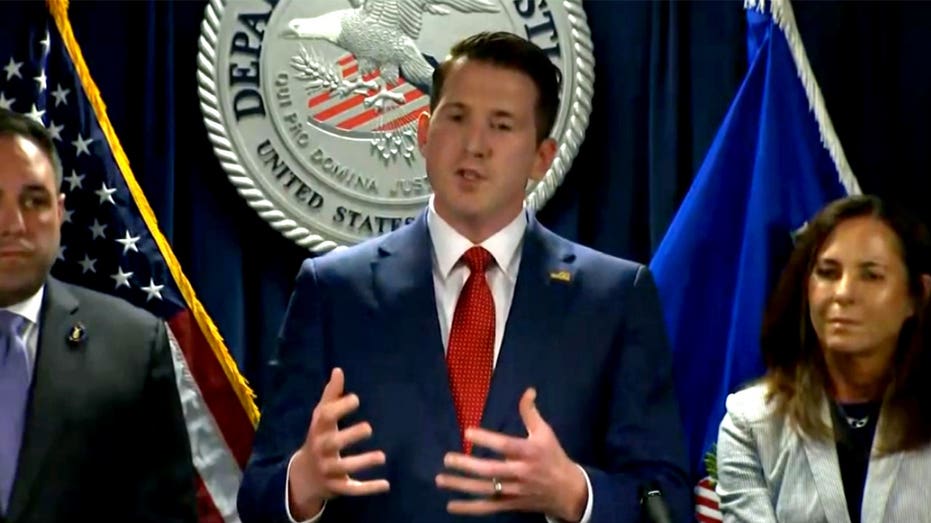
Federal officials framed the arrests as part of a larger national strategy to crack down on organized crime operating across state lines and international borders. Acting Attorney General Todd Blanche described the defendants as dangerous offenders engaged in serious criminal activity and said the Justice Department remains committed to disrupting firearms and narcotics trafficking networks.
“This takedown demonstrates the power of coordinated law enforcement action to dismantle violent criminal networks operating in our communities,” a federal official said in a statement.
Public Safety and Accountability
Law enforcement agencies emphasized that the operation relied on intelligence-sharing across jurisdictions and sustained investigative work. Homeland Security Investigations officials credited collaboration between agencies for the scope and speed of the arrests.
At a time when communities across the country are grappling with the devastating impact of fentanyl and gun violence, the removal of dozens of firearms and large quantities of drugs from circulation is significant. Public health advocates and violence prevention organizers have long argued that disrupting trafficking pipelines is a key step in protecting working-class neighborhoods that often bear the brunt of both addiction and gun crime.
Still, advocates for immigrant rights caution that sweeping rhetoric around transnational gangs must not be used to stigmatize broader immigrant communities. While individuals accused of violent crimes must be held accountable through due process, community leaders stress that enforcement actions should remain focused on specific criminal conduct rather than fueling fear or scapegoating.
- More than 25 individuals charged in the latest operation
- Over 80 firearms seized
- Roughly 18 kilograms of illegal drugs recovered
- More than $100,000 in cash confiscated
- Charges filed across six federal districts
The federal government designated Tren de Aragua as a foreign terrorist organization last year, escalating the legal tools available to prosecutors. That designation has allowed authorities to bring expanded charges and coordinate broader task force efforts in pursuing alleged members and associates.
As this case moves through the courts, the accused individuals are entitled to the presumption of innocence — a cornerstone of the American justice system. Meanwhile, policymakers and community advocates alike continue debating how best to balance aggressive enforcement against violent crime with long-term investments in prevention, economic opportunity, and social stability.
For many Americans, true public safety means more than arrests alone. It requires confronting the root causes of violence — poverty, instability, exploitation, and the unchecked flow of weapons — while upholding democratic values and human rights. Whether this latest federal operation delivers lasting change will depend not only on prosecutions, but on sustained commitment to safer, stronger communities for all.