We All Matter News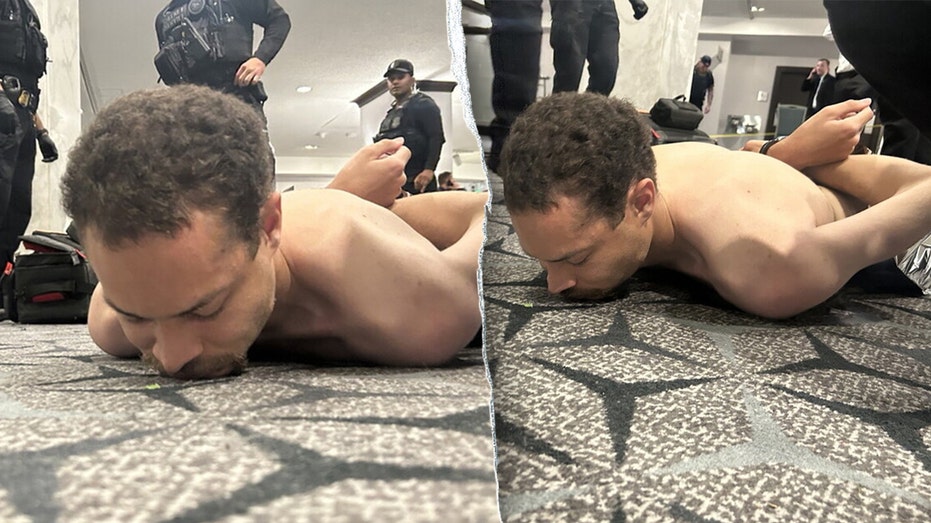
Cross-Country Notes Reveal Troubling and Disjointed Mindset of Man Accused in White House Dinner Shooting
New court filings in the case against Cole Allen, the 31-year-old accused of attempting to assassinate President Donald Trump at the White House Correspondents’ Association Dinner, offer a disturbing window into his state of mind in the days before the alleged attack.
Prosecutors say Allen purchased a one-way Amtrak ticket from Los Angeles to Washington, D.C., on April 21, traveling across the country with only a train change in Chicago. During that journey, investigators allege he kept an ongoing set of notes on his phone—observations and reflections written as he crossed the American landscape. The entries, included in court documents, do not reference violence directly. Instead, they reveal a series of wandering thoughts that experts say point to a fractured and conflicted psychological state.
While passing through the Southwest, Allen reportedly described “wind turbines looming like snowy mountains across the hazy New Mexico desert.” In Chicago, he wrote that the city felt like “an Iowa small town scaled up to L.A. size.” As the train rolled through a wooded stretch of southwestern Pennsylvania, he marveled at forests that looked like “vast fairy lands filled with tiny trickling creeks in spring.”
These reflections, prosecutors argue, stand in stark contrast to what authorities say was unfolding beneath the surface: a plan to carry out political violence at a high-profile public event in the nation’s capital.
Allen arrived in Washington on the afternoon of April 24 and spent roughly 30 hours in the city before the alleged shooting at the Washington Hilton. Surveillance footage released by the Justice Department shows him pacing hotel hallways and briefly entering a fitness center before leaving moments later.
According to authorities, a pre-scheduled email was sent to Allen’s family and friends minutes before the attack. In that message, he allegedly attempted to explain his motivations. While acknowledging that his actions could bring severe consequences, he did not explicitly state he was prepared to die. Prosecutors say he framed his intentions in political terms, portraying himself as a defender of the oppressed, while apologizing repeatedly to loved ones—and even to people he had encountered on his train trip.
Jonny Grusing, a former FBI special agent who spent years coordinating behavioral analysis work in the Bureau’s Denver field office, reviewed the publicly available materials and described Allen’s writings as deeply inconsistent.
“The tone swings from casual and almost flippant to grandiose,” Grusing said, noting that the apology-filled manifesto reads less like a focused ideological screed and more like someone struggling to reconcile his self-image with planned violence.
Grusing observed that Allen appeared conflicted—apologizing to co-workers, family members, and even strangers unaffected by his alleged actions. That pattern, he suggested, may reflect someone preoccupied with how they would be perceived rather than singularly driven by a coherent political grievance.
He characterized Allen’s mindset as “scattered,” pointing to elements of narcissism in the writings. According to Grusing, certain statements suggest Allen viewed himself as uniquely responsible for addressing what he saw as systemic problems—casting himself as a lone actor stepping into history.
This case underscores the volatile intersection of political extremism, personal grievance, and the toxic culture of martyrdom that can fester in polarized times. Democracy depends on debate, organizing, and collective action—not violence fueled by a belief in individual heroics. When someone begins to see themselves as the sole savior of a nation, experts warn, that mindset can become profoundly dangerous.
Political violence—no matter the target—undermines the fundamental democratic principles that protect all Americans. As this case moves through the courts, it also serves as a stark reminder of the urgent need to address radicalization, invest in mental health support, and reduce the rhetoric that frames politics as an apocalyptic battle rather than a contest of ideas.
Allen’s attorney has not publicly commented on the latest court filings. The case continues to unfold as investigators and the public seek answers about how personal turmoil and political grievance allegedly converged into an act that shook the nation’s capital.