We All Matter News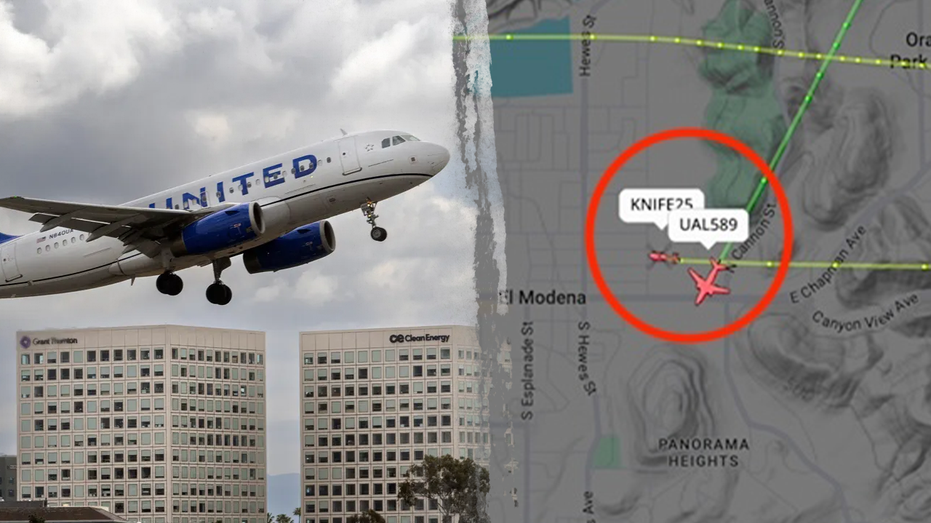
New Near-Miss Between Passenger Jet and Military Helicopter Raises Fresh Air Safety Questions
A terrifying near-collision over Southern California is putting renewed focus on air safety and accountability in American skies. On Tuesday night, a United Airlines passenger jet carrying 162 passengers and six crew members was forced to take evasive action after a U.S. Army Black Hawk helicopter crossed directly into its flight path near John Wayne Airport in Santa Ana.
According to the Federal Aviation Administration, United Flight 589 was on its final descent around 8:40 p.m. when the military helicopter cut in front of the Boeing 737-800. Air traffic control had warned the pilots to watch for a helicopter in the area—but seconds later, automated collision-avoidance systems sounded an urgent alarm indicating the aircraft were dangerously close.
In response to what’s known as a “resolution advisory,” the United pilots immediately leveled off—halting their descent to create more vertical distance between the two aircraft. The jet ultimately landed safely, and no injuries were reported. But audio from air traffic control makes clear how serious the situation was.
“We had a resolution advisory,” one of the pilots confirmed. The controller’s response: “We’re gonna be addressing that because that was not good.”
Those chilling words underscore just how narrowly disaster may have been avoided.
A Pattern That Demands Action
The FAA has launched an investigation into the close call, including whether updated safety procedures were properly followed. Earlier this month, federal officials announced new rules suspending the use of “visual separation” between airplanes and helicopters—a practice that relied on pilots and controllers maintaining distance by sight rather than through mandatory radar-managed spacing.
Under the revised directive, air traffic controllers are now required to use radar to maintain precise lateral or vertical separation between aircraft. The change came after a comprehensive review of aviation safety following last year’s devastating midair collision near Ronald Reagan Washington National Airport.
On January 29, 2025, an Army Black Hawk helicopter slammed into an American Airlines passenger plane near Washington, D.C., killing all 64 people aboard the commercial jet and three service members in the helicopter. That tragedy exposed systemic vulnerabilities and raised urgent concerns about how military and civilian aircraft share crowded airspace.
This week’s close call in California—coming just days after a fatal runway collision at New York’s LaGuardia Airport that killed two Air Canada pilots—adds to mounting anxiety about whether enough has been done to protect the flying public.
Public Safety Must Come First
The intersection of military operations and commercial aviation demands crystal-clear coordination and strict safety enforcement. When passenger planes filled with families, workers, and children are forced into split-second evasive maneuvers, it is more than a technical glitch—it is a policy failure that demands accountability.
Communities deserve to know:
- Were updated radar-based separation procedures fully in place and followed?
- Why was a military helicopter operating so close to a busy commercial approach path?
- Are air traffic control centers sufficiently staffed and resourced?
For years, aviation safety advocates and labor unions representing pilots and controllers have warned about staffing shortages, fatigue, and increasing congestion in U.S. airspace. Safe skies require investment—not austerity, not bureaucratic delay, and not complacency.
The United flight landed without incident thanks to the skill and quick judgment of its pilots and the effectiveness of onboard traffic-avoidance technology. But technology and heroics should not be the last line of defense.
As the FAA investigates, transparency will be key. The public deserves clear answers and swift corrective action. Protecting lives in the air is not a partisan issue—it’s a basic responsibility of a government that claims to serve its people.
After the heartbreak of last year’s deadly crash in Washington, Americans were promised reforms. This latest near-miss is a sobering reminder that promises must be matched with rigorous oversight and meaningful change. Our skies—and the people who travel them every day—deserve nothing less.