We All Matter News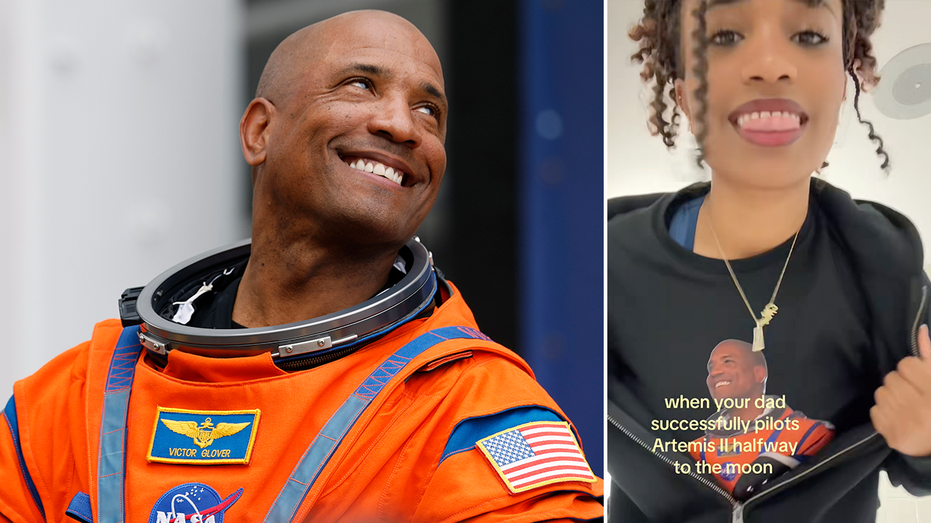
A Black Astronaut’s Historic Journey Sparks Joy — and a Viral Moment of Family Pride
As NASA’s Artemis II mission barrels toward a safe return from its groundbreaking trip around the moon, one of the most powerful moments didn’t happen inside the Orion spacecraft — it unfolded on social media.
The daughter of Artemis II pilot Victor Glover has captured hearts across the country with a joyful, unscripted tribute to her dad’s history-making achievement. In a short video that quickly went viral, Maya Glover dances playfully while wearing a T-shirt featuring her father in his astronaut suit, celebrating as only a proud daughter can.
Her caption struck a perfect balance of humor and awe: she joked about nearly forgetting her dance while her dad successfully piloted Artemis II halfway to the moon. The post exploded online, drawing nearly 22 million views across platforms in just days. Major brands chimed in, dubbing her the “first daughter of the moon” and praising her father as “iconic.”
But this wasn’t just feel-good content — it was a cultural milestone wrapped in a family moment. Victor Glover has made history as the first Black astronaut to travel beyond low Earth orbit and venture into deep space toward the moon. For a nation still wrestling with systemic inequality, his presence at the helm of one of NASA’s most ambitious missions represents something far bigger than a scientific achievement.
It’s about representation. It’s about breaking barriers. And it’s about expanding who gets to see themselves in humanity’s biggest dreams.
A Family Legacy in the Making
In a separate post, Maya, a student at California Polytechnic State University, shared childhood photos that reveal just how deeply space exploration has shaped her life. She described herself as the kid who built rockets in the garage while wearing her dad’s aviator helmet — a little girl growing up with big, interstellar dreams.
Now, that same child watched her father launch toward the moon aboard the most powerful rocket ever built. Her words — full of pride and love — resonated widely: this wasn’t just about a single astronaut. It was about family, sacrifice, and generational aspiration.
For communities historically excluded from elite scientific spaces, moments like this matter. When children of color see someone who looks like them steering humanity’s next chapter in space exploration, it sends a powerful message: you belong in the lab, in the cockpit, and in the control room. You belong everywhere decisions about our collective future are made.
The Road Home: Risk and Responsibility
Artemis II’s 10-day mission marks the first crewed deep space journey since the Apollo era, a bold step in NASA’s renewed push to return humans to the moon. The Orion spacecraft is expected to splash down in the Pacific Ocean following re-entry — one of the most perilous stages of the mission.
Traveling at blistering speeds approaching 25,000 mph, the spacecraft must endure extreme heat and pressure as it pierces Earth’s atmosphere. The risks underscore the immense courage and preparation required of astronauts and the thousands of workers behind the scenes who make such missions possible.
Public investment in space exploration often sparks debate, but programs like Artemis also fuel scientific discovery, technological innovation, and thousands of union-supported jobs across the country. They remind us what collective effort — funded and supported by the people — can achieve.
More Than a Viral Moment
Maya Glover’s viral dance is delightful on its own. But it also stands as a reminder that history isn’t only written in official statements or mission logs. Sometimes, it’s found in the quiet pride of a daughter cheering on her father.
- A Black astronaut piloting humanity’s return to deep space.
- A family celebrating love and perseverance.
- Millions of young people witnessing what’s possible.
As Orion makes its high-stakes return to Earth, one thing is already certain: this mission has expanded more than our physical horizons. It has broadened the story of who gets to reach for the stars — and who gets to be celebrated when they do.
When we invest in opportunity and open doors long closed, we don’t just launch rockets. We launch dreams — for all of us.
That’s a legacy that reaches far beyond the moon.